

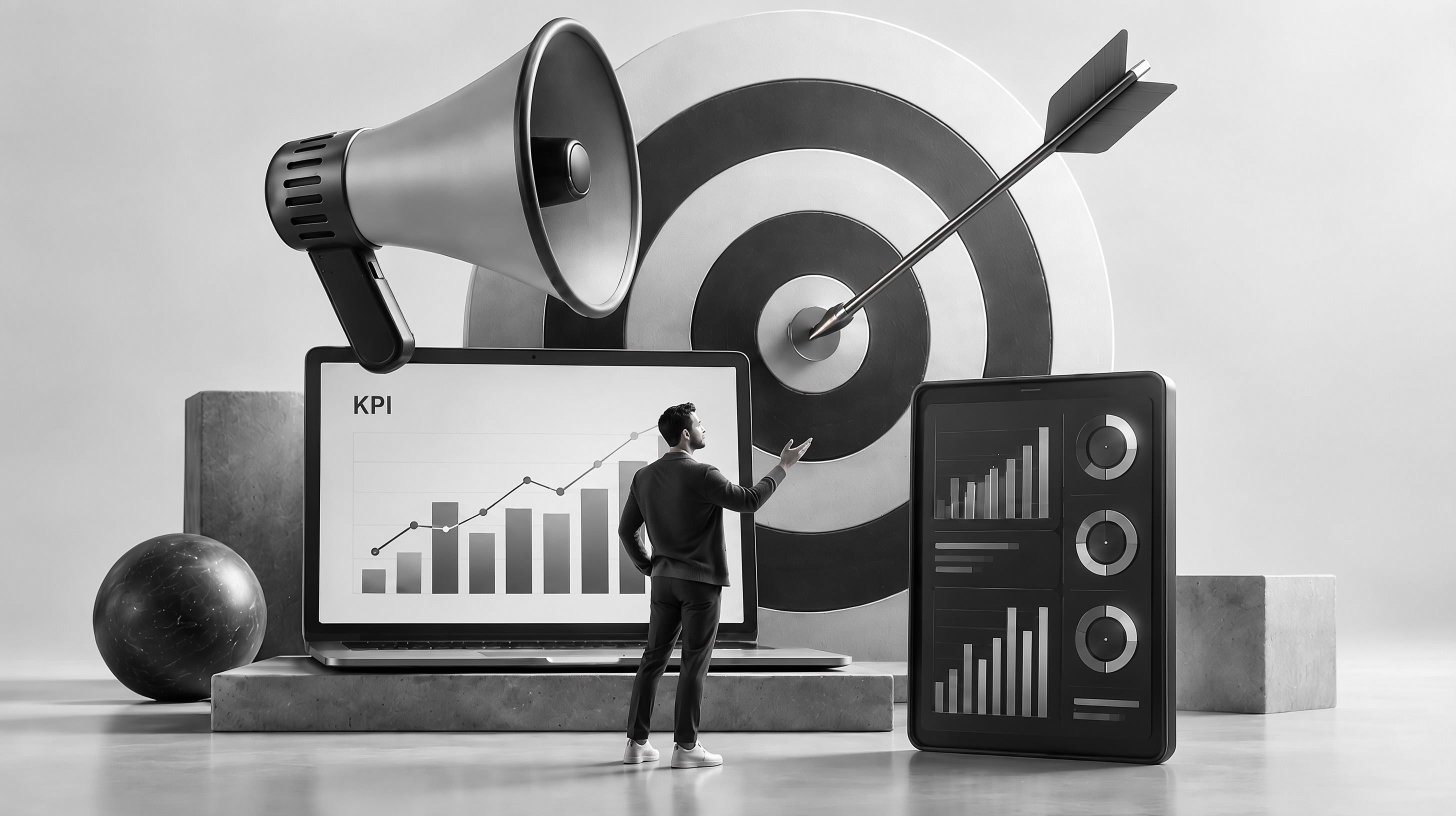
Performance Branding is the discipline of managing brand with the same operational rigor that performance marketing applies to media and conversion. Find out why it wasn't possible at scale previously but is now.
There is a conversation happening in marketing departments, boardrooms, and agency conference rooms right now that goes something like this:
"We need to be more performance-driven."
And then brand gets cut.
Not eliminated. That would be too obvious. Just underfunded, under-measured, and increasingly difficult to defend when the quarterly budget review comes around. Performance marketing produces an attribution report showing hard data. Brand produces a deck with some awareness numbers and a request for patience.
This is not a new tension. But it has reached a breaking point.
The last decade of digital marketing built a powerful myth: that the only marketing worth funding is marketing you can measure in real time, attribute to a specific channel, and optimize toward a conversion event. Performance marketing became the language of marketing accountability. Brand became the language of marketing faith.
An entire industry got built around that myth. We are now watching its consequences compound.
Performance marketing got something fundamentally right: marketing should be accountable. Every dollar spent should connect to a measurable outcome. Strategy should be informed by data. Decisions should be revised when the evidence changes.
That is basic operational discipline, not a radical idea. But it is an idea brand management resisted for too long.
Performance marketing also got something fundamentally wrong. It decided the only good metrics are short-term metrics, and it conflated accountability with attribution.
Clicks are measurable. Conversions are attributable. Neither one tells you what is happening to your brand.
A campaign can produce excellent click-through rates alongside a brand that is slowly becoming indistinguishable from its competitors. An aggressive promotion calendar can hit every revenue target in Q2 while training customers to wait for discounts in Q3. A relentless focus on bottom-of-funnel conversion can deplete the top-of-funnel awareness that made those conversions possible in the first place.
Performance marketing measures what happens in the next 48 hours. Brand determines what happens over the next four years. Companies that optimize for the first while neglecting the second risk a slow and incrementally imperceptible degradation of their brand over time.
For a lot of organizations, time is starting to run out.
Our own data says as much.
Across the twenty technology brands in the Brand Performance Index, awareness averages 92 out of 100. Perception averages 80. That twelve-point gap is the widest between any two of the seven dimensions we measure, and perception is the weakest dimension for two-thirds of the brands in the index. That includes Apple, whose lowest score of the seven is how it is regarded. These are the best-known companies in technology, so the awareness figure runs high by construction. The gap is the point: a decade of performance spend bought reach, and regard did not follow it.
That is what depletion looks like before it reaches the income statement. Brands that everyone can name and fewer and fewer people feel strongly about. Add AI tools producing category-average content at scale, and the messaging that was supposed to carry the difference starts sounding like everyone else’s too.
Call it a brand equity recession. It is not showing up on anyone’s P&L, which is exactly why it has been allowed to run this long.
Performance marketing earns its place. The trouble starts when the brand stops being maintained alongside it. The guidelines go stale. The positioning stops getting revisited. Nobody checks whether any of it still holds against a market that has moved.
Performance marketing keeps running, because performance marketing always keeps running. And with nobody actively shaping the brand, it begins shaping the brand instead. Whatever converts becomes the voice. Whatever the algorithm rewards becomes the positioning. The brand still exists, but it has quietly become an output of the media buy rather than the strategy the media buy was meant to express.
The fix is to give the brand a discipline of its own: apply the rigor of performance to the brand itself.
That is Performance Branding.
Performance agencies have used the phrase for years. They mean close to the opposite of what is described above.
In the prevailing definition, performance branding means bringing brand thinking into performance media. Better creative in the paid social unit. Brand-informed audience targeting. Storytelling inside the ad rather than around it. Measuring brand lift alongside conversion.
None of that is wrong. It is real work, it makes media perform better, and the agencies doing it have improved a lot of campaigns.
It is also much smaller than the problem.
That definition treats brand as an input to the performance machine, a source of better raw material for the channel. The rigor still lives with the media. The measurement discipline, the testing cadence, the decision documentation, the constant optimization: all of it stays pointed at the campaign. Brand supplies the creative and goes back to being the soft thing nobody can score.
So for a decade, the industry looked at the gap between brand and performance and moved in one direction across it. Brand thinking went into the media buy. The machine’s discipline never came back the other way, toward the asset that needed it most.
We have been thinking about this backwards, or at least not considering that brand is something that should be continuously optimized too. And to be fair, we haven’t really had the tools to continuously monitor brand until recently.
The brand is the thing that should be measured continuously, versioned deliberately, tested against competitors, governed across every team and agent, and connected to business outcomes. It is the longest-lived and most valuable asset marketing owns, and it is the one asset in the entire function still managed without instrumentation.
Performance Branding, properly understood, is not brand thinking applied to performance media. It is performance rigor applied to the brand.
Before defining it further, here is the fastest way to know whether your organization is doing it. A Performance Branding organization can answer these six questions at any moment, without commissioning anything:
1. How is our brand performing across the dimensions that predict long-term business success, and how would we know if that changed?
2. Where are our competitors positioned relative to us right now, and how has that positioning shifted in the last 30 days?
3. What brand decisions have we made in the last 12 months, what outcomes were they intended to produce, and how did they perform against those intentions?
4. When our AI tools and marketing agents produce content on behalf of our brand, what brand intelligence are they working from, and how current is it?
5. How often does our brand appear, and appear favorably, in AI-generated answers when buyers in our category are making decisions?
6. What would we do differently if our brand’s position weakened noticeably over the next 30 days?
Most marketing organizations cannot answer these today. Not because the information does not exist, but because they have not built the infrastructure to surface it continuously, structure it usefully, and connect it to the decisions that need making.
If you read that list and felt the gap, that gap is what Performance Branding closes.
Performance Branding is the discipline of managing brand with the same operational rigor that performance marketing applies to media and conversion. The underlying claim is simple: something is always shaping your brand. The only question is whether it is you.
It has its own methodology, its own metrics, and its own infrastructure requirements.
Measure brand health continuously, not periodically. Brand health is not a quarterly survey. It is a living set of signals, including awareness, perception, positioning strength, consistency, loyalty, association, and market influence, that shift in response to everything the market does. A competitor repositions. A cultural moment changes the meaning of a phrase you have been using for years. A product launch succeeds in a way that shifts how customers categorize you. These things move faster than quarterly measurement cycles can capture. Performance Branding requires always-on monitoring that reflects what is happening to the brand now, not what was happening when someone last commissioned a study.
Document brand decisions as hypotheses with measurable outcomes. Every significant brand decision, whether a positioning change, a voice evolution, or a campaign strategy, should be recorded with its intended outcome and evaluated against what actually happened. This is standard practice in product development and in performance marketing. It is nearly nonexistent in brand management. Without a decision record, brand strategy has no institutional memory: the same experiments get rerun, the same mistakes get remade, and when leadership changes the reasoning behind every strategic choice walks out the door with them.
Maintain competitive intelligence in real time. Brand positioning is not absolute. It is relative to what competitors are doing and saying in the same market at the same moment. A position that was differentiated last quarter can be generic this quarter because a competitor moved into the same territory. What Performance Branding requires is not the quarterly audit, which describes a landscape that no longer exists by the time it lands. It is a continuous radar that surfaces every significant move as it happens.
Govern brand execution across every team, every partner, and every AI agent. Brand consistency at scale has always been a governance problem. In an era of AI-generated content, autonomous marketing agents, and distributed global teams, it is becoming a governance emergency. Performance Branding requires a structured, machine-readable brand intelligence layer that every human and every agent consults before producing anything that represents the brand. Not a PDF on a shared drive. Infrastructure.
Connect brand performance to business outcomes. Brand health should not live in a separate reporting track from revenue, retention, and pricing power. When brand awareness rises, customer acquisition cost should fall. When brand perception improves, price sensitivity should decrease. When brand consistency strengthens, customer loyalty should compound. These connections are measurable. Performance Branding makes them visible.
Once you accept that the rigor belongs pointed at the brand rather than at the channel, you need somewhere for that rigor to live. Continuous measurement needs a measurement system. Decision records need a place to be recorded. Competitive monitoring needs to run whether or not anyone remembers to check. Governance needs infrastructure that every team and every agent actually consults.
Performance Branding is the discipline, the decision to manage brand with performance rigor. Brand Performance Management is the operating model that makes the discipline executable rather than aspirational.
You can commit to the first tomorrow. Most organizations that do will discover within a week that they have no system capable of supporting it, which is the gap the second one fills.
The reason brand management resisted rigorous measurement was partly cultural and partly economic. Measuring brand health comprehensively required expensive research, slow methodologies, and a long lag between what happened in the market and what showed up in the data. By the time the tracking study landed, the moment to act on it had passed.
That constraint is gone.
AI-powered brand monitoring can track awareness, sentiment, perception, and positioning in real time across the channels where buyers actually form opinions. Competitive intelligence tools surface competitor moves the day they happen rather than the quarter they get reported. Machine-readable brand frameworks can give an AI agent the same brand context a senior strategist carries in their head, available at the point of every content and campaign decision. And always-on measurement can connect brand investment to business outcomes in near real time, giving brand the same accountability infrastructure performance marketing has used to justify its budget for two decades.
The technology that makes Performance Branding possible did not exist at scale five years ago. It exists now. The organizations that recognize this and build on it will compound an advantage over the ones that keep managing brand the old way.
The accountability performance marketing brought to media and conversion decisions was genuinely valuable. Performance Branding proposes the same accountability, applied to the asset that makes those conversions possible in the first place.
Brand is not the soft, unmeasurable counterpoint to hard performance data. It is the most durable driver of long-term business performance there is, more persistent than any individual product advantage, more compounding than any individual campaign, and more protective of margin than any pricing strategy that has not been earned through years of brand building.
It has been shaped by proxy for too long. Not for lack of anyone caring about it, but because the infrastructure to measure it well, continuously, and at reasonable cost did not exist, and in that vacuum the channel took over the job by default.
It exists now.
Performance Branding completes what performance marketing started: operational discipline applied to the full scope of marketing’s job, not just the bottom of the funnel but the entire asset the funnel depends on. It puts the brand back under deliberate control, held by the people accountable for it rather than by whatever the last quarter of media spend happened to reinforce.
The organizations that make this shift will look back on the era of siloed performance marketing and siloed brand management the way we now look at the era before integrated marketing, as an unnecessary limitation that made both disciplines less effective than they should have been.
Brandmaven is the platform that makes Performance Branding operationally possible, giving brand leaders, CMOs, and the agencies that serve them the always-on brand intelligence, competitive monitoring, governed brand infrastructure, and AI visibility measurement they need to manage brand with the rigor it has always deserved. Explore Brandmaven at brandmaven.ai, or get started free.
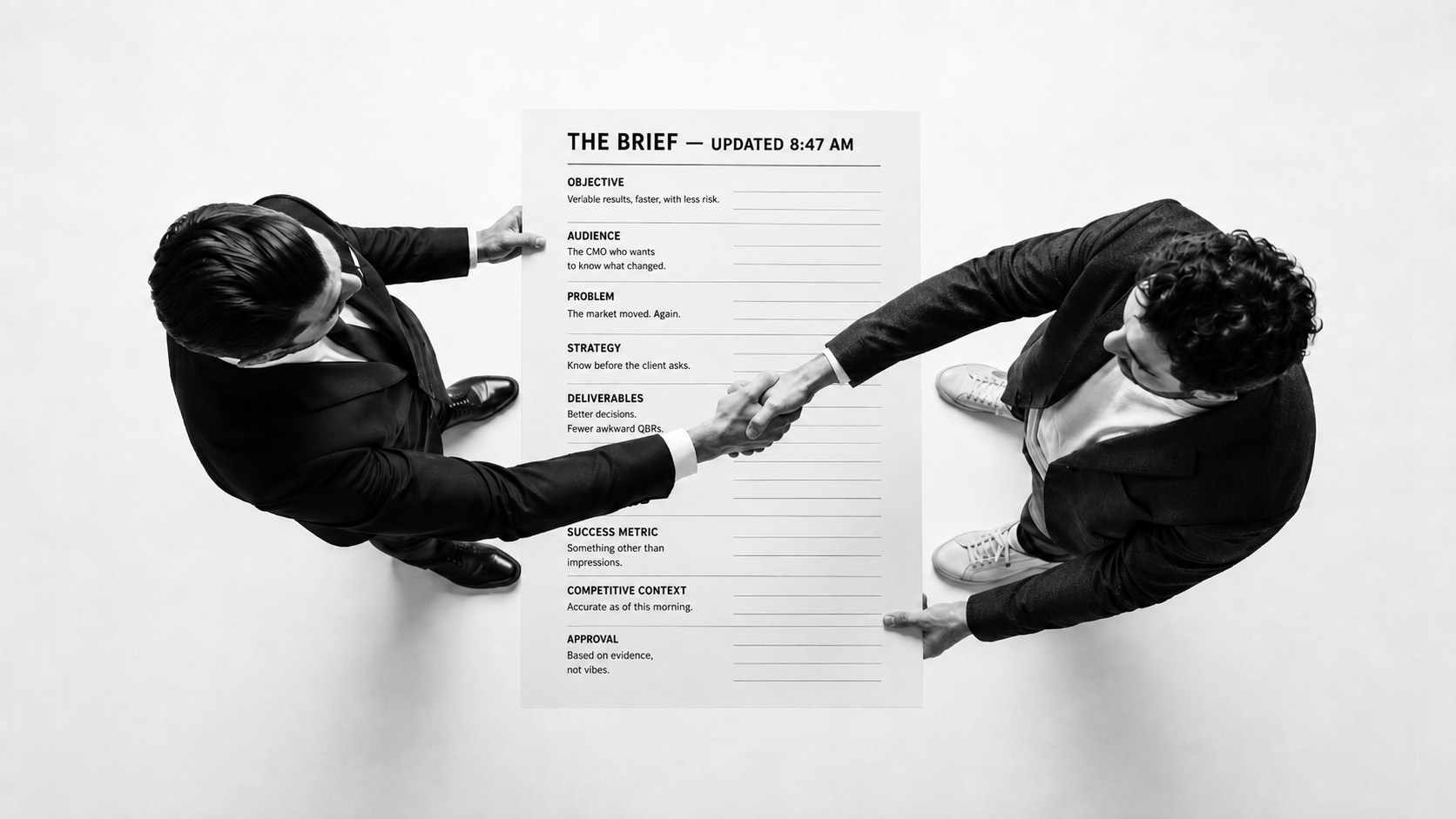
Why Brand Performance Management is becoming a core service line for advertising, brand, and marketing agencies.
Read More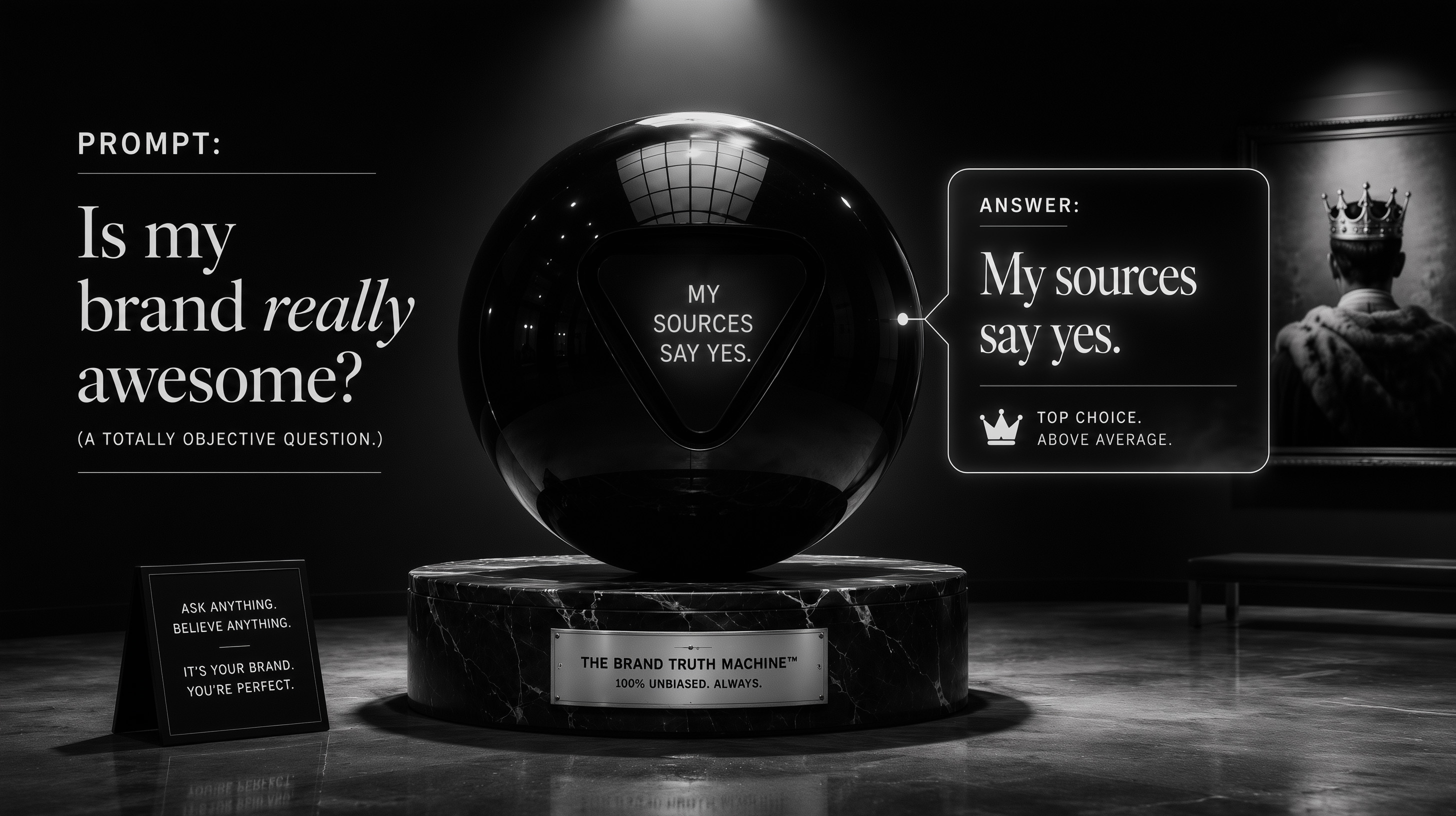
Best practices and tips for improving your GEO performance by developing better prompts.
Read MorePerformance Branding is the discipline of managing brand with the same operational rigor that performance marketing applies to media and conversion. Find out why it wasn't possible at scale previously but is now.
Read MoreAnswers to questions you might have about Brandmaven.

Brandmaven is the system of record for brand performance — connecting real-time monitoring, documented decisions, and measurable outcomes across seven brand dimensions. It gives brand teams a live health score, a radar on their competitors, AI-powered action plans, and the institutional memory to make every decision faster and smarter than the last. No fluff. Just the clarity brand has always deserved.
Brand leaders who are tired of flying blind. CMOs, Global Brand Directors, VPs, and Brand Strategists at growth-stage and enterprise companies — and the agencies that serve them. Also built for the operations and intelligence leaders responsible for making brand decisions at scale: the people who need data, not decks. If brand performance is your accountability, Brandmaven is your operating system.
Far fresher than anything in a survey, spreadsheet, or slide deck. You get updates as things shift — not after everyone’s already moved on. Data is checked and cross-checked by three leading AI platforms: Perplexity, Anthropic, and OpenAI. Enterprise-grade security throughout.
No. Think of Brandmaven as your internal command center — the context layer that makes your agency smarter and your research more actionable. It accelerates what your external teams do, gives you real-time signal between engagements, and means you walk into every agency briefing with a sharper brief. Expert voices and qualitative insight still matter — Brandmaven amplifies them.
No PhD required. The platform is built for brand leaders who need to decide, not decode — clean UI, fast to navigate, and everything you care about front and center. Every engagement starts with a dedicated onboarding process. We handle the complexity. You focus on the intelligence.
Brandmaven is available through three engagement models — Strategy, Agency, and Enterprise — each built around your organization's specific needs. All pricing is custom and quote-based. Contact us to get started.
The most concrete ROI is audience testing: run focus groups using AI personas in minutes instead of the three weeks and $50,000–$100,000 a traditional study costs. Most teams recover the annual cost of Brandmaven in a single research cycle they no longer need to outsource. Beyond that — decisions get faster, alignment improves (one source of truth instead of ten decks), and brand KPIs move because you're acting on real-time signal, not rear-view-mirror reporting.
A brand analysis is Brandmaven's AI-powered assessment of how your brand is performing across seven dimensions: market awareness, perception, positioning strength, consistency, loyalty, association, and market influence. It produces your Brand Impact Score — a single, trackable number that reflects your brand's overall health.
Yes. The Agency tier is built for brand and marketing agencies building intelligence into client engagements — with continuous monitoring across your client portfolio, client-ready reporting, and a reseller program with revenue sharing. Contact us to learn more.
Strategy is a focused engagement — brand intelligence delivered for a specific decision: a market entry, an acquisition, an executive reset. Agency is for brand and marketing firms building Brandmaven into client delivery, with continuous portfolio monitoring and a reseller program with revenue sharing. Enterprise is a dedicated, fully managed deployment for large organizations that need brand intelligence at scale — their own instance, full access, and ongoing support. All three are quote-based. Get in touch and we’ll find the right fit.
We’ll be in touch within one business day. Expect a short conversation to understand your brand, your goals, and which engagement model fits. From there, we put together a proposal and get you started. No drawn-out sales process — just what we need to set you up right.
Required for the website to function. These cannot be disabled.
Used to understand how visitors interact with our website and deliver personalized ads (Google Analytics, Google Ads, Meta Pixel, LinkedIn).