


Brand decisions are made and forgotten. Rationale evaporates when people leave. The same mistakes get repeated. A brand ledger — a running record of decisions and outcomes — is the institutional memory infrastructure brand has always needed.
Every organization has a memory problem. The accumulated knowledge of why decisions were made, what hypotheses were being tested, what worked and what didn't . . . this knowledge lives in the heads of the people who were there. When those people leave, the knowledge leaves with them.
In most business functions, this problem is partially solved by systems. CRM captures the history of customer relationships. Project management tools preserve decision trails. Financial systems maintain records of commitments and outcomes. These aren't perfect institutional memories, but they're something. A foundation on which new team members can build, a record that prevents organizations from repeating the same experiments without knowing they've already run them.
Brand has no equivalent. Brand decisions such as repositioning choices, campaign directions, messaging frameworks, identity investments, strategic bets on category positioning are made and forgotten. The rationale dissolves when the people who held it move on. The outcome data, when it exists at all, sits in a presentation that nobody can find three years later. The lessons that should compound into strategic wisdom instead evaporate, leaving each new brand leader to start from something approximating scratch.
This is not a small problem. It is one of the primary reasons brand quality is so difficult to sustain across leadership transitions. And it has a structural solution that almost no organization has built.
Institutional memory for brand isn't a brand bible or a style guide. Those documents capture intent at a moment in time. What they don't capture is the decision history: the sequence of choices, the reasoning behind them, and critically, the outcomes they produced.
A genuine brand system of record needs to capture three things that current tools don't: the decisions that shaped the brand over time, the hypotheses those decisions were testing, and the evidence about whether those hypotheses proved correct.
This is what a brand ledger is: a running record of strategic decisions and their outcomes, maintained over time, accessible to everyone who needs to understand how the brand arrived at its current state and what has been learned along the way.
The value of this record compounds. After two or three years of consistent documentation, a brand team has something genuinely rare: evidence-based understanding of which types of investments move which brand dimensions, what competitive conditions enable brand momentum, and what the organization's specific track record is in predicting brand outcomes. This understanding reduces decision risk, accelerates execution, and produces a compounding advantage over competitors who are still making brand decisions from intuition and incomplete memory.
Every brand strategy built without access to decision history is built on a foundation that erodes every time someone leaves the organization. The answer isn't better onboarding. It's better infrastructure.
The most acute version of the institutional memory problem is leadership transition. When a new CMO or brand leader arrives, the conventional wisdom is that they need six months to "get oriented" before they can contribute strategically. Much of that orientation time is spent reconstructing the rationale for decisions that were made before they arrived . . . interviewing people, reading old decks, trying to understand why the brand is where it is.
This is expensive in ways that go beyond the salary cost of a learning curve. During orientation periods, brand strategy tends to drift toward inertia. The new leader is reluctant to make moves before they understand the context, so the brand coasts on decisions whose rationale nobody can fully articulate. When they do start making moves, they often repeat experiments that have already been run, or reverse decisions whose reasoning they don't have access to, or reset initiatives whose results were actually promising.
A brand ledger compresses the orientation period dramatically. A new leader with access to a comprehensive record of brand decisions and their outcomes can orient in days rather than months. They arrive with context, not just data. They can build on what's been learned rather than starting over.
Brand decisions made without a record create an accountability vacuum. When there's no documentation of what hypothesis was being tested, no pre-commitment to what evidence would count as success or failure, and no systematic review of whether the decision produced the intended outcome, brand strategy becomes immune to learning.
This is why the same brand mistakes get made repeatedly across organizations and across decades. Without institutional memory, there's no mechanism for the organization to recognize that it's made this bet before, under similar conditions, and know what happened.
A brand ledger creates accountability without requiring blame. When a decision is documented alongside its hypothesis and its eventual outcome, the organization can learn from it regardless of whether it succeeded or failed. The question stops being "whose fault was this?" and starts being "what does this tell us about how our brand works?"
Brand strategy that can't learn from its own history isn't strategy. It's improvisation with a logo attached.
For a brand ledger to function as genuine institutional memory, each entry needs to capture: the decision that was made and when, the strategic hypothesis behind it (what did we expect this to accomplish and why?), the brand dimensions it was intended to move, the outcome (what actually happened, measured against the dimensions that were targeted) and the contextual conditions that surrounded the decision (what was happening competitively, what market conditions were relevant, what organizational factors were in play?).
This isn't an onerous documentation requirement. A well-designed system makes this lightweight. A discipline of a few minutes at decision time and a few minutes at outcome review time. The investment is minimal. The compounding return is enormous.
The organizations that build this infrastructure now will have a brand learning advantage in five years that will be genuinely difficult to replicate. The ones that don't will keep wondering why their brand never seems to improve despite continuous investment.
Memory is strategy. Build the record. Get started with Brandmaven, which includes the industry's first Brand Ledger.
This is the seventh post in a series on Brand Performance Management. Final post: the complete operating model — what Brand Performance Management looks like as a discipline and why it will define the next era of brand leadership.
Previous post: How AI Sees Your Brand And Why It Matters
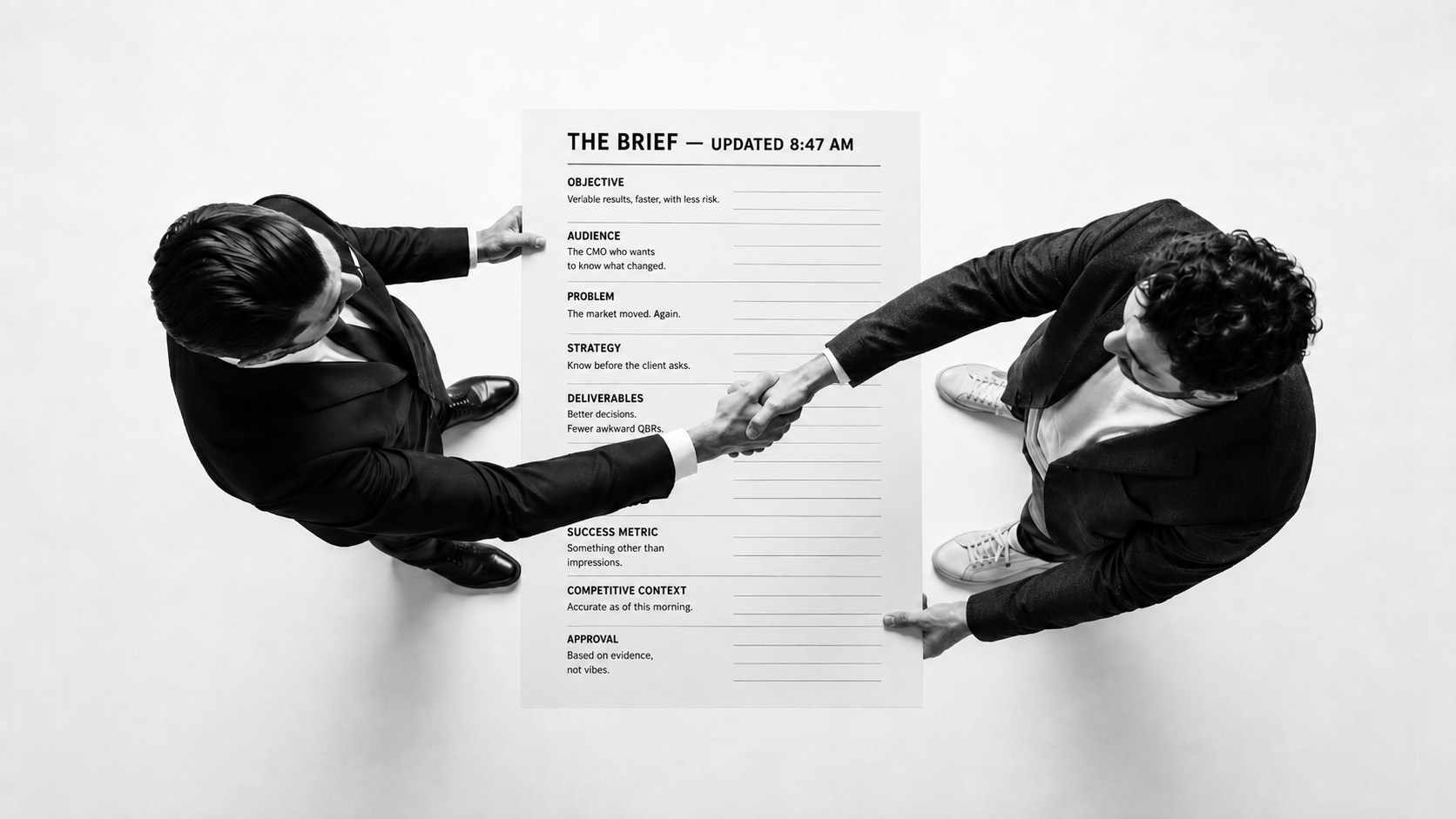
Why Brand Performance Management is becoming a core service line for advertising, brand, and marketing agencies.
Read More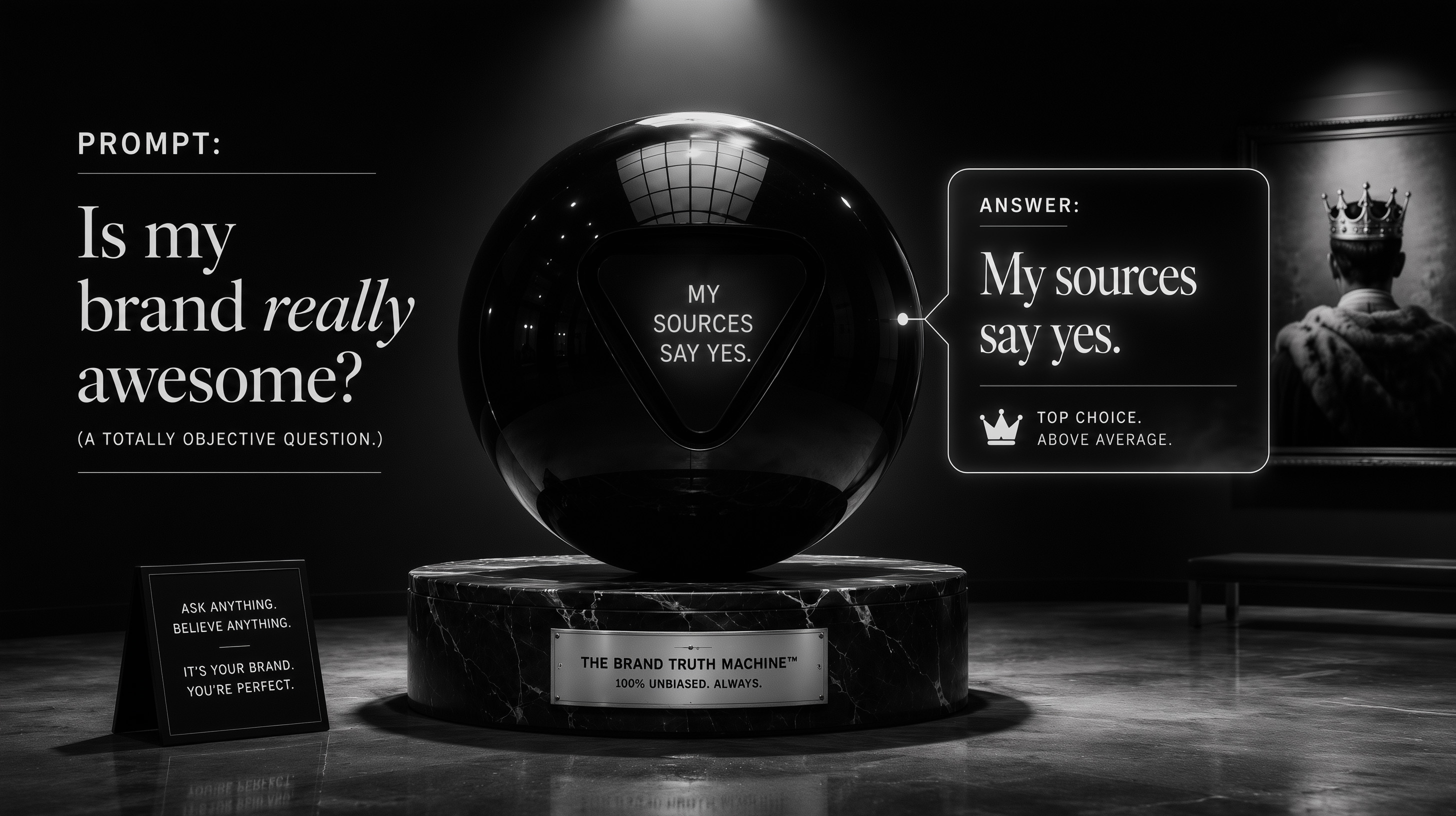
Best practices and tips for improving your GEO performance by developing better prompts.
Read More
Performance Branding is the discipline of managing brand with the same operational rigor that performance marketing applies to media and conversion. Find out why it wasn't possible at scale previously but is now.
Read MoreAnswers to questions you might have about Brandmaven.

Brandmaven is the system of record for brand performance — connecting real-time monitoring, documented decisions, and measurable outcomes across seven brand dimensions. It gives brand teams a live health score, a radar on their competitors, AI-powered action plans, and the institutional memory to make every decision faster and smarter than the last. No fluff. Just the clarity brand has always deserved.
Brand leaders who are tired of flying blind. CMOs, Global Brand Directors, VPs, and Brand Strategists at growth-stage and enterprise companies — and the agencies that serve them. Also built for the operations and intelligence leaders responsible for making brand decisions at scale: the people who need data, not decks. If brand performance is your accountability, Brandmaven is your operating system.
Far fresher than anything in a survey, spreadsheet, or slide deck. You get updates as things shift — not after everyone’s already moved on. Data is checked and cross-checked by three leading AI platforms: Perplexity, Anthropic, and OpenAI. Enterprise-grade security throughout.
No. Think of Brandmaven as your internal command center — the context layer that makes your agency smarter and your research more actionable. It accelerates what your external teams do, gives you real-time signal between engagements, and means you walk into every agency briefing with a sharper brief. Expert voices and qualitative insight still matter — Brandmaven amplifies them.
No PhD required. The platform is built for brand leaders who need to decide, not decode — clean UI, fast to navigate, and everything you care about front and center. Every engagement starts with a dedicated onboarding process. We handle the complexity. You focus on the intelligence.
Brandmaven is available through three engagement models — Strategy, Agency, and Enterprise — each built around your organization's specific needs. All pricing is custom and quote-based. Contact us to get started.
The most concrete ROI is audience testing: run focus groups using AI personas in minutes instead of the three weeks and $50,000–$100,000 a traditional study costs. Most teams recover the annual cost of Brandmaven in a single research cycle they no longer need to outsource. Beyond that — decisions get faster, alignment improves (one source of truth instead of ten decks), and brand KPIs move because you're acting on real-time signal, not rear-view-mirror reporting.
A brand analysis is Brandmaven's AI-powered assessment of how your brand is performing across seven dimensions: market awareness, perception, positioning strength, consistency, loyalty, association, and market influence. It produces your Brand Impact Score — a single, trackable number that reflects your brand's overall health.
Yes. The Agency tier is built for brand and marketing agencies building intelligence into client engagements — with continuous monitoring across your client portfolio, client-ready reporting, and a reseller program with revenue sharing. Contact us to learn more.
Strategy is a focused engagement — brand intelligence delivered for a specific decision: a market entry, an acquisition, an executive reset. Agency is for brand and marketing firms building Brandmaven into client delivery, with continuous portfolio monitoring and a reseller program with revenue sharing. Enterprise is a dedicated, fully managed deployment for large organizations that need brand intelligence at scale — their own instance, full access, and ongoing support. All three are quote-based. Get in touch and we’ll find the right fit.
We’ll be in touch within one business day. Expect a short conversation to understand your brand, your goals, and which engagement model fits. From there, we put together a proposal and get you started. No drawn-out sales process — just what we need to set you up right.
Required for the website to function. These cannot be disabled.
Used to understand how visitors interact with our website and deliver personalized ads (Google Analytics, Google Ads, Meta Pixel, LinkedIn).