

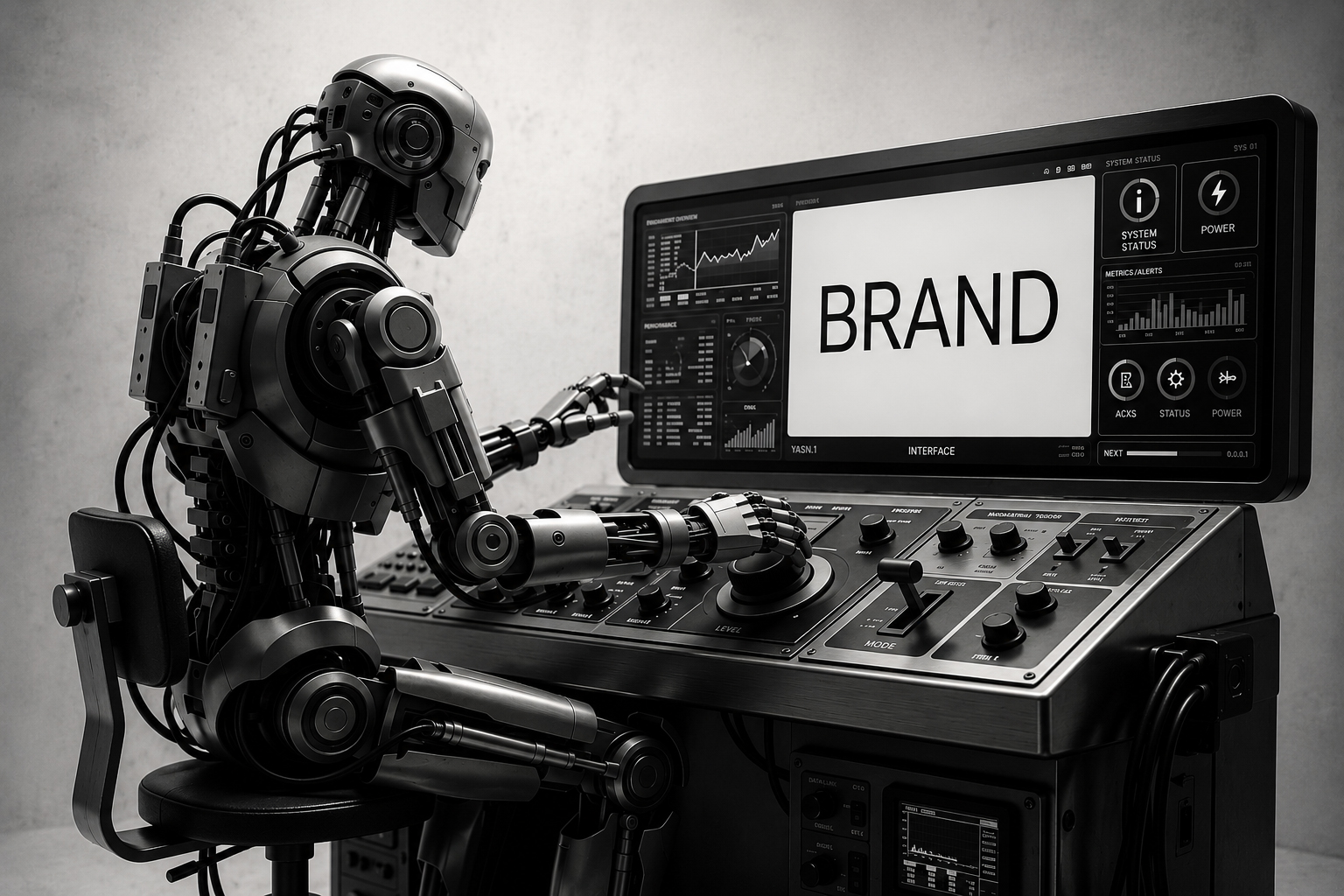
AI agents are coming to the Marketing Department. But when they arrive, what will they actually know about your brand? The answer depends on whether you've built a machine-readable performance layer first.
Every week, a new headline announces that another function is getting its AI agent.
Finance has one. Operations has one. Sales has one. Customer service has several. The narrative is consistent and compelling: specialized AI agents, coordinated by a central orchestration layer, are going to transform how businesses run. Your future org chart will include both people and agents, each with defined responsibilities and measurable outputs.
It's a good story. And it's largely true. McKinsey describes this shift as hybrid human–agentic workforces where agents execute most of the work and humans design and oversee the network. The Canadian Marketing Association frames it as marketing moving from using AI as a tool to partnering with systems that autonomously understand, reason, and act. Google puts it plainly: agents are "things that do things".
But buried in the excitement is a question nobody is asking about brand: When your organization gets a Brand Agent, what will it actually know about your brand?
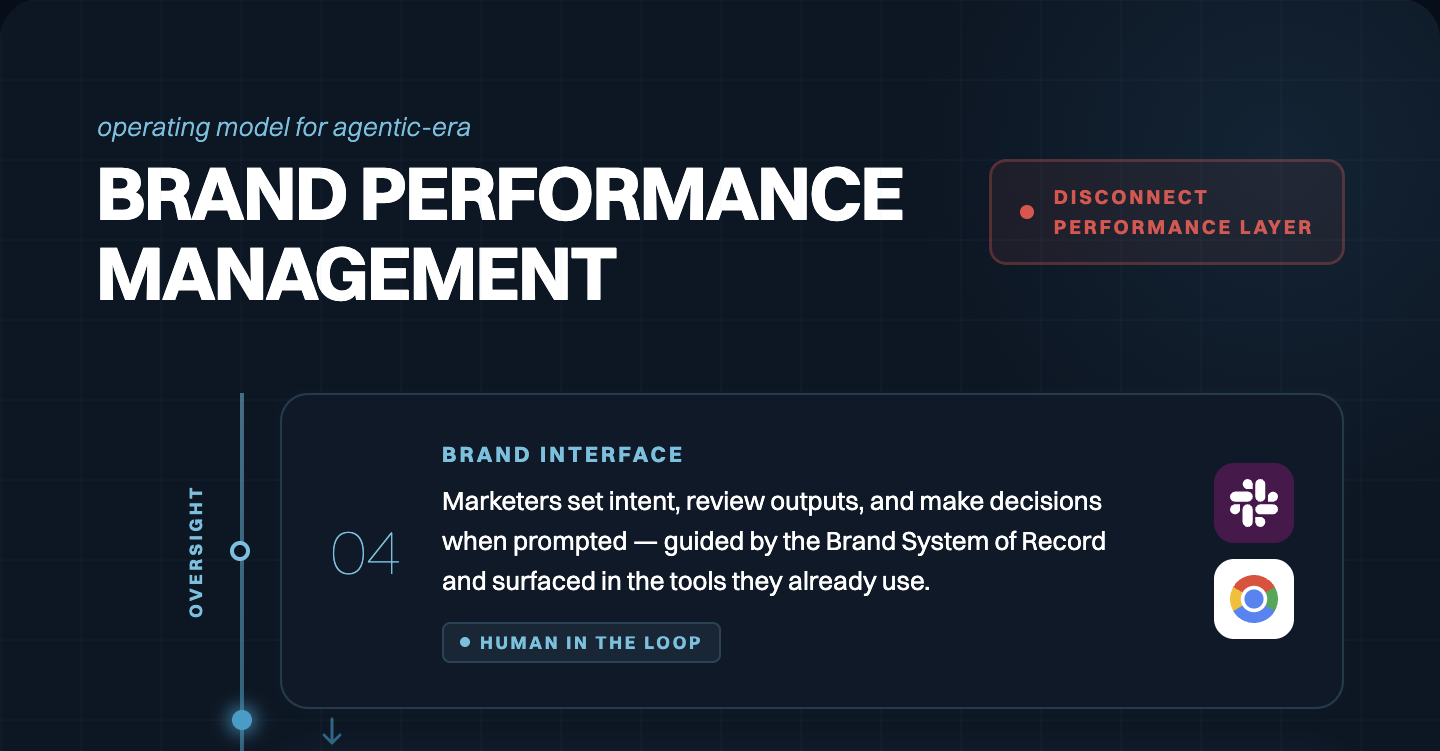
Right now, the most urgent threat to brand is the speed gap: the widening distance between how fast brand-relevant decisions are being made and how equipped teams are to make them well.
Brand decisions aren't just happening in strategy sessions anymore. They're happening in every automated email sequence, every AI-generated ad variation, every product copy update, every sales enablement template. The volume and velocity of decisions that carry brand risk have grown dramatically and they're going to keep growing.
Most brand teams are trying to manage this with tools designed for a slower world: quarterly brand trackers, fragmented analytics, episodic research studies, and institutional memory stored in people's heads rather than systems.
This isn't a criticism of those teams. It's a structural gap. And it's about to get much worse.
As AI agents move into marketing operations and start managing campaign pacing, personalizing customer journeys, generating content variations, and optimizing bids, the pace of brand-relevant decisions will accelerate beyond what any human review process can keep up with.
That's not a reason to slow down on agents. The efficiency gains are real, and the competitive pressure to adopt them is already building. It's a reason to build the governance infrastructure first. As McKinsey notes from a year of agentic AI deployments, the challenge is operating model and governance, not raw model capabilities. Organizations must deconstruct workflows, define scopes, and set controls before agents get meaningful responsibility.
Here's the problem in plain terms: an agent executing a customer journey doesn't know what your brand stands for. It doesn't know that you've been deliberately positioning against a competitor on the dimension of simplicity. It doesn't know that last quarter you made a conscious decision to pull back on urgency-based messaging because it was eroding trust. It doesn't know your brand is in a sensitive moment following a product change.
An agent optimizes for what you tell it to optimize for. As Harvard Business Review suggests, what's required is a trusted, continuous, and structured source of brand intelligence (a performance layer). Without it, you're putting the fate of your brand into the hands to a system that has no real understanding of the asset it's operating on.
Think about what a Brand Agent will actually need to function responsibly. Not a chatbot that answers questions about your guidelines. Not an AI that generates on-brand copy. A genuine Brand Agent. One that monitors perception, detects drift, proposes strategic moves, and coordinates with other systems. I will need:
A machine-readable framework of business and brand rules. Agents need a frame of reference for positioning, messaging, tone of voice, customer insight, competitor insight, AI prompting guidelines . . . all kept up to date, not in a static PDF. This layer is essential as it governs how AI agents will make decisions, give human counterparts advice, and execute real work in the quality you demand.
A current, structured view of brand health. Not last quarter's tracker. A live read of how your brand is perceived across dimensions: clarity of message, distinctiveness, emotional resonance, competitive positioning. Brand performance is increasingly understood as multi-dimensional, spanning awareness, consideration, preference, loyalty, and associations. It needs continuous measurement tied to business outcomes, not annual snapshots. Brandmaven's Brand Health Monitoring tracks exactly these signals continuously, so agents and humans are always working from a current picture, not one that's six weeks stale.
Clear priorities and trade-offs. Brand performance isn't one-dimensional. You're always making trade-offs . . . growth versus consistency, broad awareness versus category ownership, short-term performance versus long-term equity. A Brand Agent needs to know which bets you're making and why, or it will optimize for the easiest metric at the expense of the right one.
A record of past decisions and the reasoning behind them. Organizations repeat brand mistakes not because they lack talent, but because context doesn't survive. When the team changes, when the agency rotates, when the CMO turns over, the institutional knowledge of what was tried, what worked, and why certain decisions were made, that all disappears. Brand Ledger was built precisely for this: preserving decision context so every future choice (human or agent) is made in full view of what came before.
Brand Performance Management is exactly that substrate. It's the operating layer that transforms brand from a set of guidelines and intuitions into a continuously maintained, decision-grade asset that both humans and agents can actually use. Read the full BPM framework →
A Solutions Consultant at a leading visual collaboration platform said it best after his first session:
"Brandmaven gave me what I needed before I knew how to ask for it."
That's not a feature description. That's what a performance layer actually does — it monitors, synthesizes, and surfaces brand intelligence continuously, so that when the moment arrives, you're already holding the answer.
The good news is that you don't need to wait for Brand Agents to exist before BPM starts delivering value. Organizations that implement a brand performance layer now get immediate, practical benefits:
Faster, more confident decisions in the moments that matter — repositioning conversations, crisis responses, campaign pivots, budget allocation debates. Instead of scrambling for data and alignment, you have a shared model that the whole team works from.
Clearer creative direction. When you know precisely where brand health is strong and where it's under pressure, briefs get sharper. Agencies spend less time guessing and more time solving the right problem.
Preserved decision history. The reasoning behind your brand choices becomes an organizational asset rather than a departing executive's memory.
And when your Brand Agent does arrive (when the orchestration platforms are mature, when the category has figured out what a Brand Agent actually does) you'll already have the performance layer it needs to operate responsibly. You won't be scrambling to build the foundation under a running system.
There's a pattern emerging across every domain where AI agents are being deployed: the organizations winning aren't the ones who moved fastest to deploy agents. They're the ones who had clean data, structured decision logic, and governed processes in place before the agents arrived.
Finance teams that built robust performance management systems over the past decade are deploying financial agents that actually work. Logistics organizations with mature operations data are running agent-driven optimization that compounds over time. The agent is only as good as the intelligence layer beneath it.
Brand is no different. Except that most organizations have invested less in governing brand as a performance asset than they have in governing almost any other function. Brand has largely been managed through intuition, relationships, and creativity. Those things matter enormously. They don't disappear in an agentic world.
But they need to be grounded in something more durable. A shared model of what brand performance actually means. Continuous visibility into where you are. A decision architecture that converts insight into action and records why.
That's the Brand Codex, a centralized brand framework that guides and governs agentic and human action. Start building yours today.
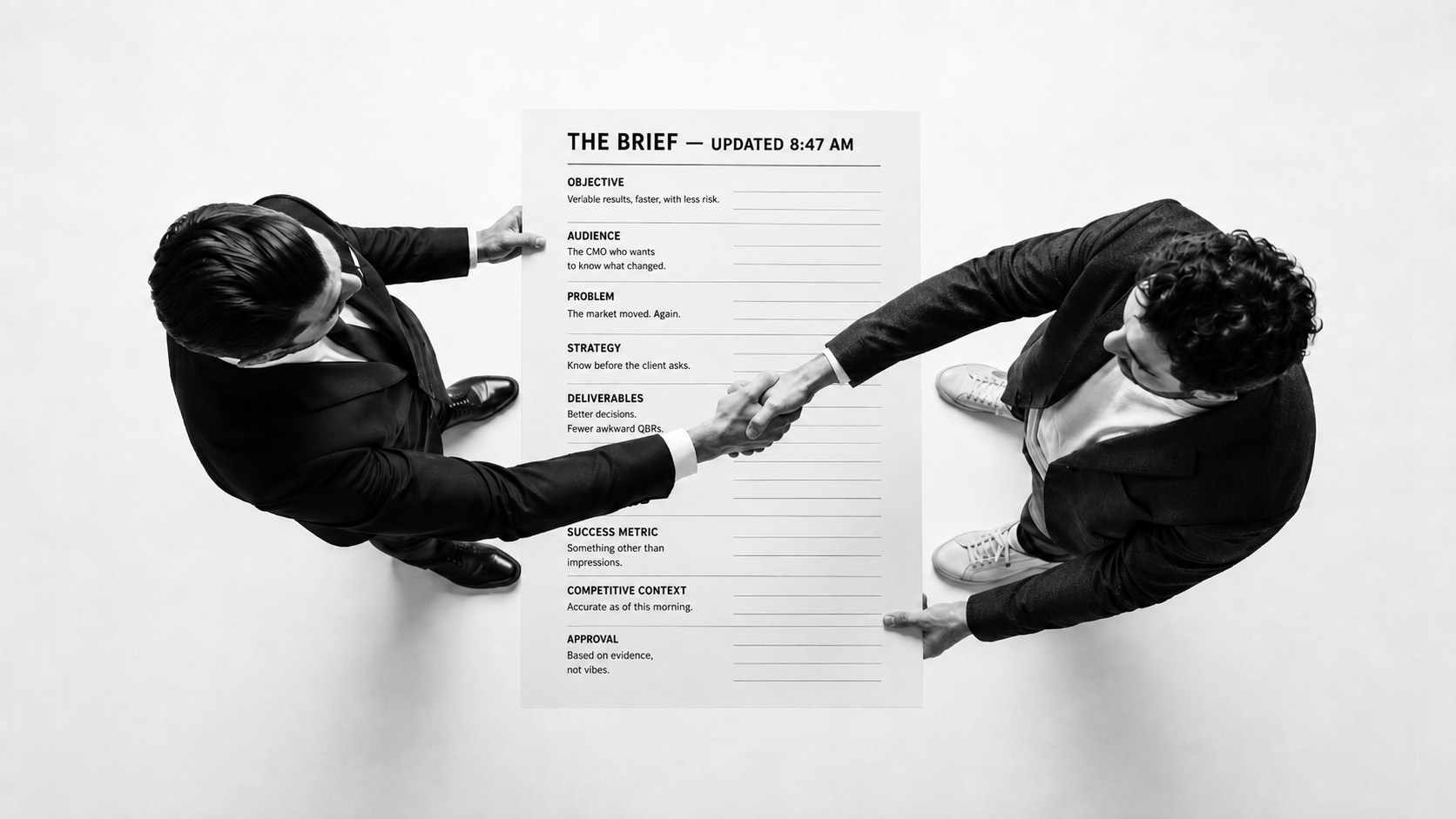
Why Brand Performance Management is becoming a core service line for advertising, brand, and marketing agencies.
Read More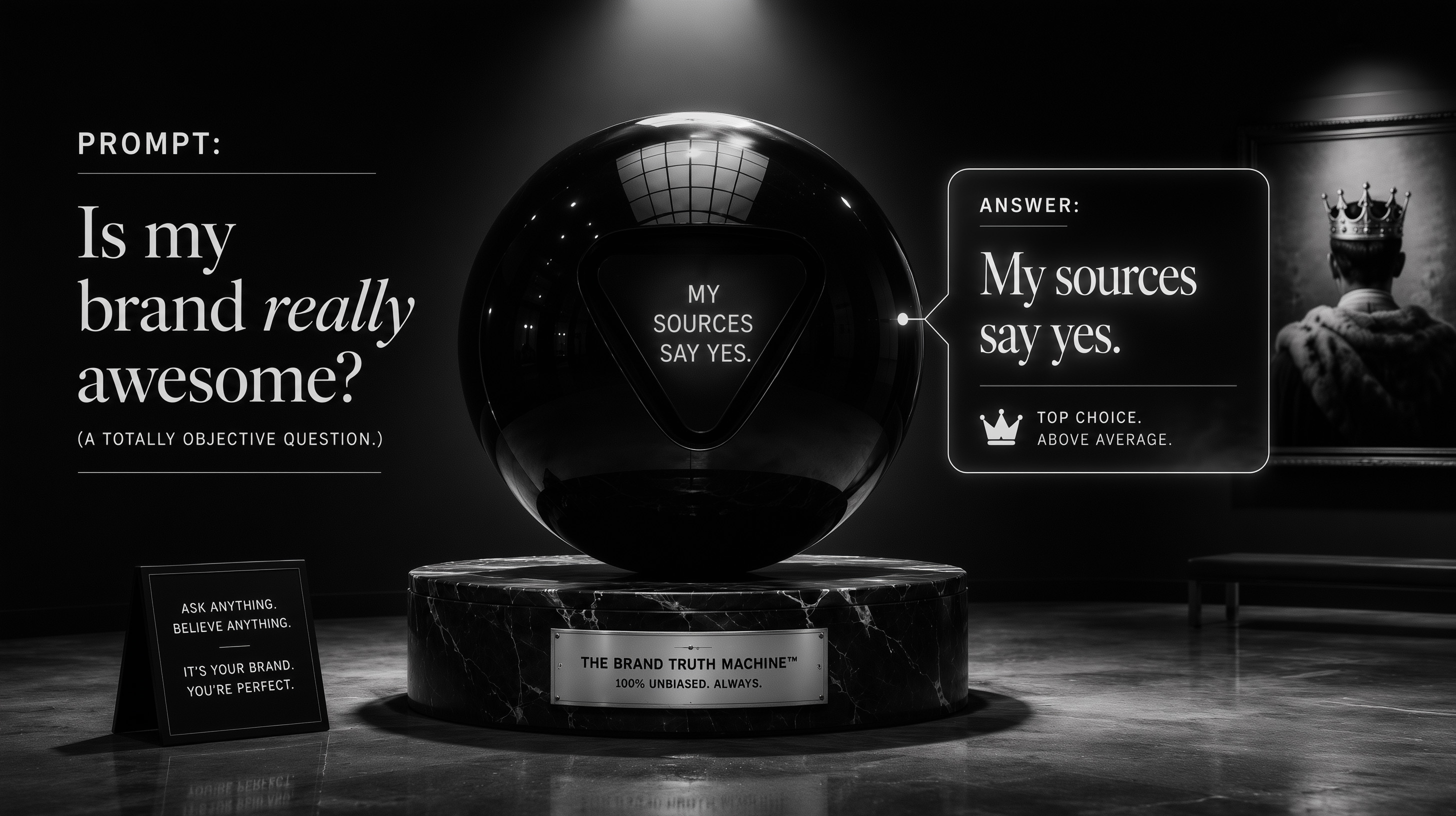
Best practices and tips for improving your GEO performance by developing better prompts.
Read More
Performance Branding is the discipline of managing brand with the same operational rigor that performance marketing applies to media and conversion. Find out why it wasn't possible at scale previously but is now.
Read MoreAnswers to questions you might have about Brandmaven.

Brandmaven is the system of record for brand performance — connecting real-time monitoring, documented decisions, and measurable outcomes across seven brand dimensions. It gives brand teams a live health score, a radar on their competitors, AI-powered action plans, and the institutional memory to make every decision faster and smarter than the last. No fluff. Just the clarity brand has always deserved.
Brand leaders who are tired of flying blind. CMOs, Global Brand Directors, VPs, and Brand Strategists at growth-stage and enterprise companies — and the agencies that serve them. Also built for the operations and intelligence leaders responsible for making brand decisions at scale: the people who need data, not decks. If brand performance is your accountability, Brandmaven is your operating system.
Far fresher than anything in a survey, spreadsheet, or slide deck. You get updates as things shift — not after everyone’s already moved on. Data is checked and cross-checked by three leading AI platforms: Perplexity, Anthropic, and OpenAI. Enterprise-grade security throughout.
No. Think of Brandmaven as your internal command center — the context layer that makes your agency smarter and your research more actionable. It accelerates what your external teams do, gives you real-time signal between engagements, and means you walk into every agency briefing with a sharper brief. Expert voices and qualitative insight still matter — Brandmaven amplifies them.
No PhD required. The platform is built for brand leaders who need to decide, not decode — clean UI, fast to navigate, and everything you care about front and center. Every engagement starts with a dedicated onboarding process. We handle the complexity. You focus on the intelligence.
Brandmaven is available through three engagement models — Strategy, Agency, and Enterprise — each built around your organization's specific needs. All pricing is custom and quote-based. Contact us to get started.
The most concrete ROI is audience testing: run focus groups using AI personas in minutes instead of the three weeks and $50,000–$100,000 a traditional study costs. Most teams recover the annual cost of Brandmaven in a single research cycle they no longer need to outsource. Beyond that — decisions get faster, alignment improves (one source of truth instead of ten decks), and brand KPIs move because you're acting on real-time signal, not rear-view-mirror reporting.
A brand analysis is Brandmaven's AI-powered assessment of how your brand is performing across seven dimensions: market awareness, perception, positioning strength, consistency, loyalty, association, and market influence. It produces your Brand Impact Score — a single, trackable number that reflects your brand's overall health.
Yes. The Agency tier is built for brand and marketing agencies building intelligence into client engagements — with continuous monitoring across your client portfolio, client-ready reporting, and a reseller program with revenue sharing. Contact us to learn more.
Strategy is a focused engagement — brand intelligence delivered for a specific decision: a market entry, an acquisition, an executive reset. Agency is for brand and marketing firms building Brandmaven into client delivery, with continuous portfolio monitoring and a reseller program with revenue sharing. Enterprise is a dedicated, fully managed deployment for large organizations that need brand intelligence at scale — their own instance, full access, and ongoing support. All three are quote-based. Get in touch and we’ll find the right fit.
We’ll be in touch within one business day. Expect a short conversation to understand your brand, your goals, and which engagement model fits. From there, we put together a proposal and get you started. No drawn-out sales process — just what we need to set you up right.
Required for the website to function. These cannot be disabled.
Used to understand how visitors interact with our website and deliver personalized ads (Google Analytics, Google Ads, Meta Pixel, LinkedIn).