

Most organizations spend millions on brand and almost nothing on managing it. The result is an invisible tax — paid in wasted spend, eroded equity, and decisions made in the dark. It's time to name the problem.
Ask ten people in your organization what your brand stands for. You'll get ten different answers. Some will be close. Some will be embarrassingly off. A few will describe a competitor. This isn't a communication problem. It's a structural one and it's costing you more than you think.
Brand is the most cited intangible asset in business. It shows up on balance sheets during acquisitions. It commands pricing power. It determines whether customers choose you over a cheaper alternative. It shapes whether talented people want to work for you. By every measure, it matters enormously.
And yet, in most organizations, it is managed with the rigor of a group text thread.
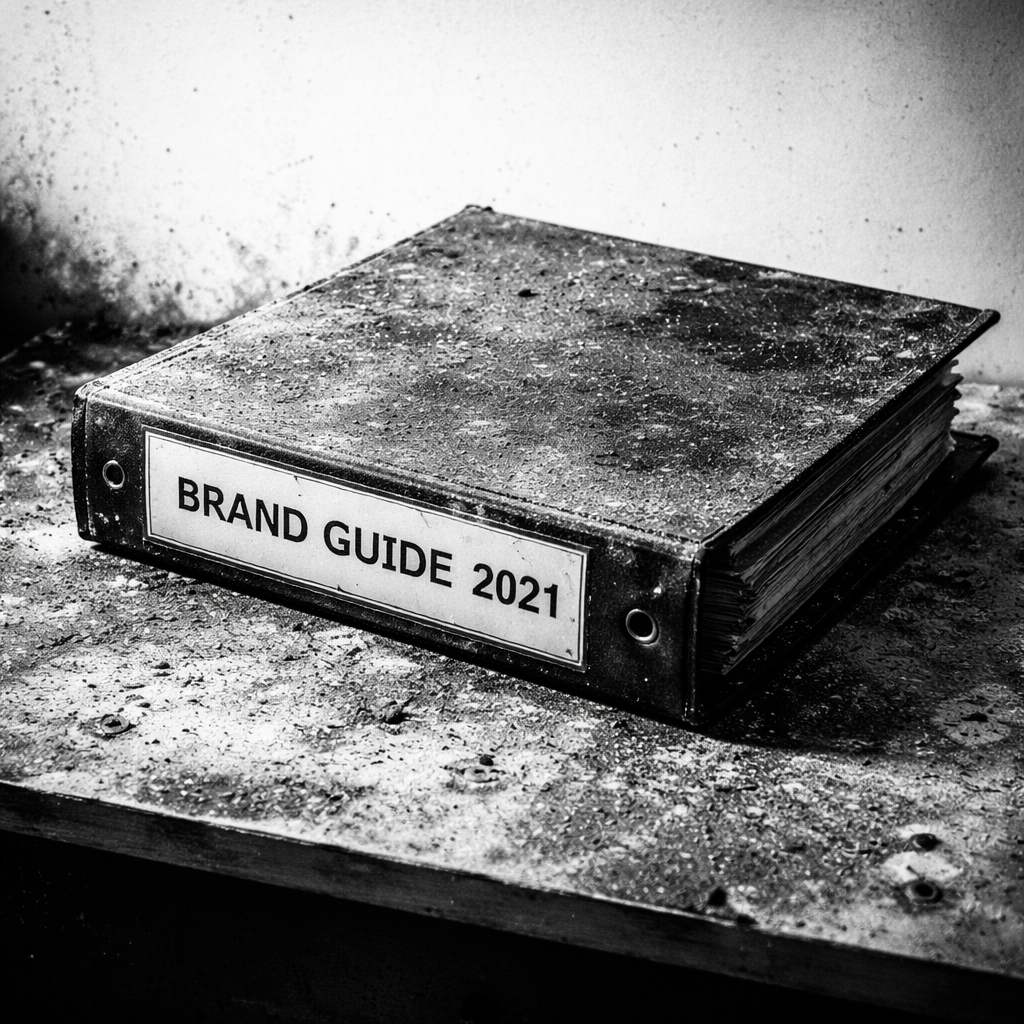
Here's what passes for brand management in most companies today: a style guide that was last updated in 2021, a brand deck that lives in a shared drive no one can find, a set of brand values on a wall in the lobby that nobody references in a single decision, and a marketing team who guards the logo like it's the Ark of the Covenant while the rest of the organization does whatever feels right.
This is a far cry from brand management. It's more like brand decoration.
Real brand management is the active, continuous work of ensuring that every touchpoint, decision, hire, product, campaign, partnership, and customer interaction is coherent with what your brand actually promises. Almost no organization does this. Not because they don't care but because they have no infrastructure to do it.
The CMO runs campaigns. The CEO talks about culture. HR writes values statements. Product ships features. Sales says whatever closes the deal. And somewhere in between all of that, the brand either holds together or quietly falls apart. Usually the latter.
You can't manage what you can't measure. And you can't measure what you've never defined, documented, or distributed.
The brand incoherence tax is real. It just doesn't appear on any income statement, so nobody owns it.
Consider what it costs when your sales team describes your positioning one way, your website says something else, and your product delivers a third thing entirely. Customers who were almost convinced walk. Prospects who got mixed signals never return your calls. Employees who don't understand the brand make decisions that chip away at it. Slowly, invisibly, expensively.
Consider the agency fees paid to rebuild brand work that should never have drifted in the first place. The campaigns that underperformed because they were built on a misunderstood positioning. The product launches that landed flat because nobody asked whether they were on-brand because nobody actually knew what on-brand meant.
Consider the onboarding problem. Every new employee who joins a 500-person company has to reverse-engineer the brand from context clues, because there is no authoritative, living source of truth that tells them: this is who we are, this is how we speak, this is how we make decisions, this is what we protect at all costs.
These costs are invisible because there's no line item for brand incoherence. But they compound. And they are enormous.
Here's a question nobody asks in the boardroom: "How do we know our brand is performing?"
Not performing in the sense of brand awareness scores or NPS. Performing in the sense of: is the brand we intended to build actually the brand we have? Is it coherent across every function? Is it strengthening or eroding? Are the decisions we made last quarter aligned with our brand strategy, and did they work?
There is no answer. Not because leaders don't want one but because there is no instrument to produce one.
Every other major organizational asset has a system of record. Finance has the ERP. Customers have the CRM. Code has version control. People have HRIS. These systems create accountability, institutional memory, shared language, and measurable outcomes.
Brand has a Dropbox folder.
This is a management philosophy problem. Brand has never been treated as something that requires governance. It's been treated as something that requires creative people. And while creative people are essential, creativity without governance produces inconsistency at scale.
The brand you intend and the brand you actually have are almost never the same thing. The gap between them is where equity erodes.
The brand coherence problem is not new. But three forces are making it dramatically more acute right now.
First, organizations are more distributed than ever. Remote and hybrid work means the informal cultural transmission mechanisms that used to keep brands coherent — sitting next to someone, absorbing norms through proximity — are gone. Brand coherence can no longer be osmotic. It has to be explicit.
Second, AI is reshaping how brands are discovered and described. When a potential customer asks an AI assistant about your brand, what answer do they get? Is it accurate? Is it aligned with how you want to be positioned? Most brands have no idea because they've never built the kind of structured, documented brand truth that AI systems can accurately represent.
Third, audiences have raised the bar on authenticity. Younger customers in particular have a finely tuned sensor for the gap between what a brand says and what it actually does. The tolerance for incoherence (for brands that preach one thing and practice another) is at an all-time low. The gap between your brand's stated values and its lived behavior is now a liability that shows up in public, loudly, and fast.
This is not an argument against creativity, instinct, or the irreplaceable value of great brand thinking. It's an argument that great brand thinking deserves infrastructure.
Managed seriously, brand requires what every other organizational asset requires: a system of record that is accessible, living, and measurable. A shared source of truth that everyone who touches the brand (which is, quite literally, everyone) can reference, apply, and contribute to. A way to track decisions, understand their impact, and build institutional memory so that when key people leave, the brand doesn't leave with them.
It requires measurement. Not just external perception studies that arrive months after the fact. Real-time intelligence about how the brand is performing across the dimensions that actually matter — awareness, positioning, consistency, loyalty, cultural resonance, competitive differentiation.
It requires accountability. Not in the punitive sense, but in the structural sense: someone, and some system, responsible for knowing the state of the brand at any given moment and being able to explain it, defend it, and improve it.
Right now, almost no organization has any of this.
Brand has always been a strategic asset. The question is why we've never governed it like one.
The organizations that figure this out first will have an enormous advantage. Not because brand management is a new idea. It's not. But because the infrastructure to do it properly is, for the first time, becoming possible.
The ones who don't figure it out will keep doing what they've always done: spending heavily on brand, measuring the outputs they can see, and remaining structurally blind to the coherence and performance of the asset underneath.
The question isn't whether brand performance management will become a standard organizational discipline. It will. The question is which organizations will treat it as the urgent strategic priority it already is.
Your brand is your most valuable intangible asset.
Start managing it like one.
This is the first post in a series on Brand Performance Management — a new operating model for organizations that are serious about brand as a strategic asset. Next up: The invisible tax of brand incoherence, and what it's actually costing you.
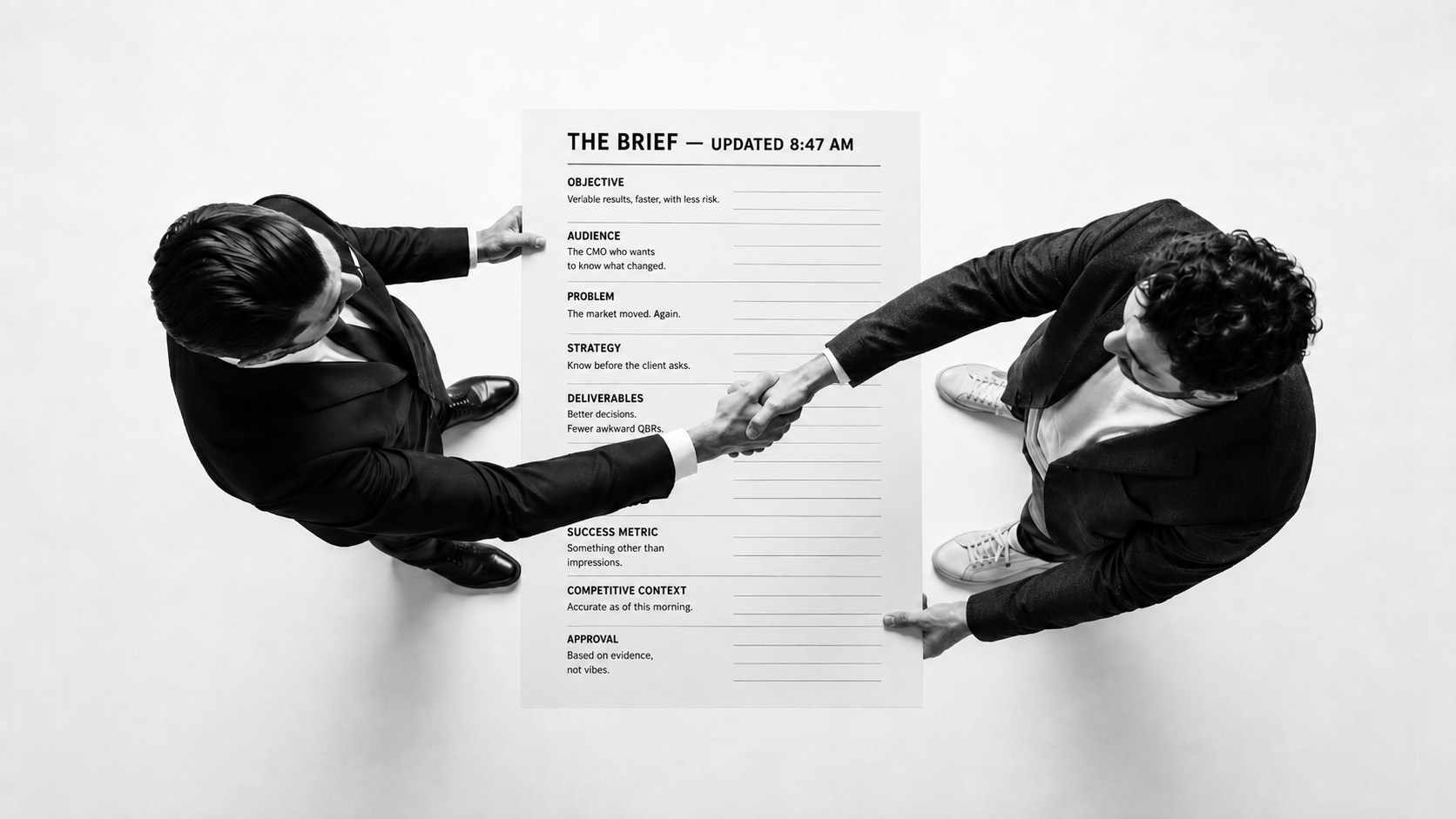
Why Brand Performance Management is becoming a core service line for advertising, brand, and marketing agencies.
Read More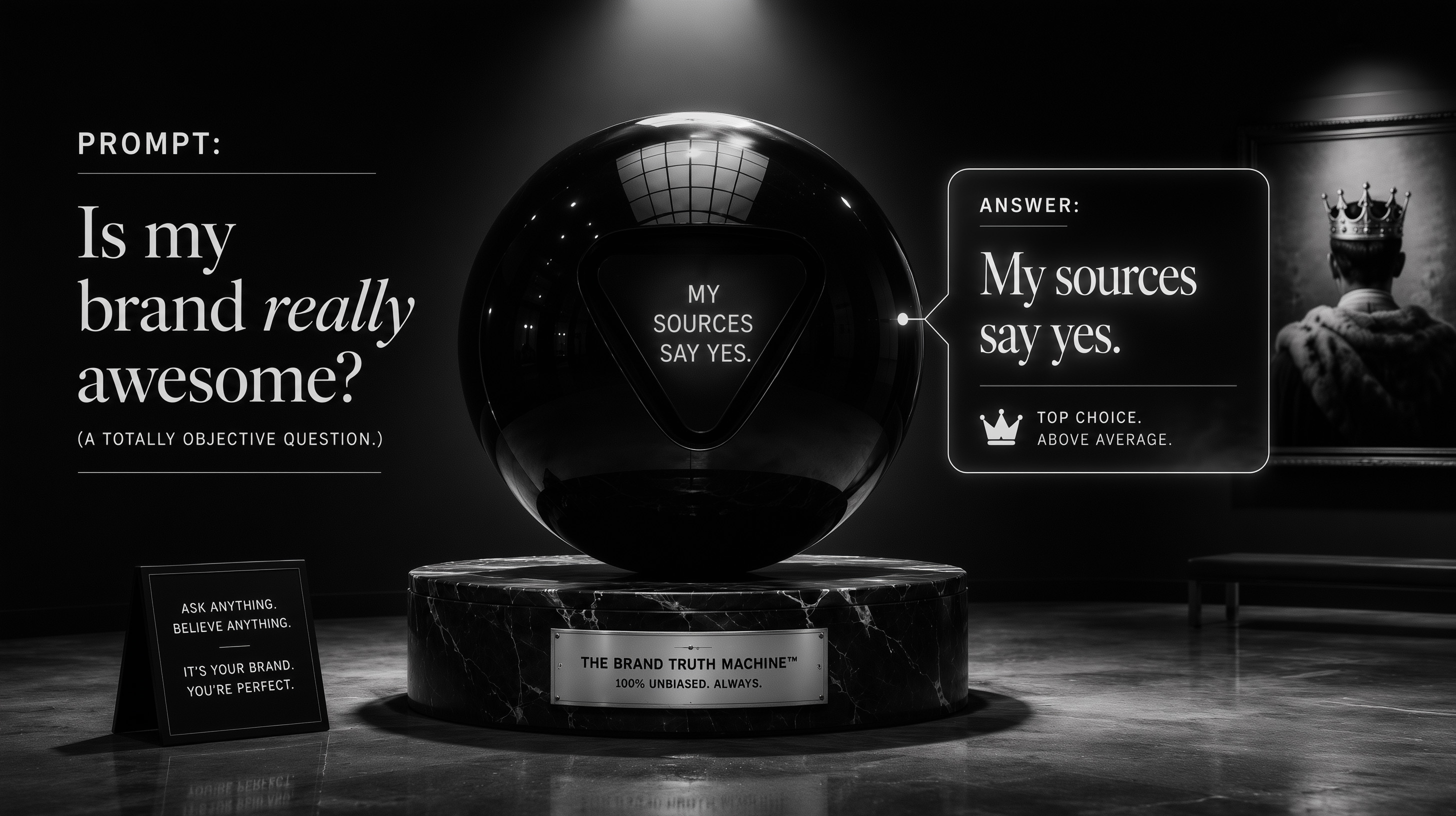
Best practices and tips for improving your GEO performance by developing better prompts.
Read More
Performance Branding is the discipline of managing brand with the same operational rigor that performance marketing applies to media and conversion. Find out why it wasn't possible at scale previously but is now.
Read MoreAnswers to questions you might have about Brandmaven.

Brandmaven is the system of record for brand performance — connecting real-time monitoring, documented decisions, and measurable outcomes across seven brand dimensions. It gives brand teams a live health score, a radar on their competitors, AI-powered action plans, and the institutional memory to make every decision faster and smarter than the last. No fluff. Just the clarity brand has always deserved.
Brand leaders who are tired of flying blind. CMOs, Global Brand Directors, VPs, and Brand Strategists at growth-stage and enterprise companies — and the agencies that serve them. Also built for the operations and intelligence leaders responsible for making brand decisions at scale: the people who need data, not decks. If brand performance is your accountability, Brandmaven is your operating system.
Far fresher than anything in a survey, spreadsheet, or slide deck. You get updates as things shift — not after everyone’s already moved on. Data is checked and cross-checked by three leading AI platforms: Perplexity, Anthropic, and OpenAI. Enterprise-grade security throughout.
No. Think of Brandmaven as your internal command center — the context layer that makes your agency smarter and your research more actionable. It accelerates what your external teams do, gives you real-time signal between engagements, and means you walk into every agency briefing with a sharper brief. Expert voices and qualitative insight still matter — Brandmaven amplifies them.
No PhD required. The platform is built for brand leaders who need to decide, not decode — clean UI, fast to navigate, and everything you care about front and center. Every engagement starts with a dedicated onboarding process. We handle the complexity. You focus on the intelligence.
Brandmaven is available through three engagement models — Strategy, Agency, and Enterprise — each built around your organization's specific needs. All pricing is custom and quote-based. Contact us to get started.
The most concrete ROI is audience testing: run focus groups using AI personas in minutes instead of the three weeks and $50,000–$100,000 a traditional study costs. Most teams recover the annual cost of Brandmaven in a single research cycle they no longer need to outsource. Beyond that — decisions get faster, alignment improves (one source of truth instead of ten decks), and brand KPIs move because you're acting on real-time signal, not rear-view-mirror reporting.
A brand analysis is Brandmaven's AI-powered assessment of how your brand is performing across seven dimensions: market awareness, perception, positioning strength, consistency, loyalty, association, and market influence. It produces your Brand Impact Score — a single, trackable number that reflects your brand's overall health.
Yes. The Agency tier is built for brand and marketing agencies building intelligence into client engagements — with continuous monitoring across your client portfolio, client-ready reporting, and a reseller program with revenue sharing. Contact us to learn more.
Strategy is a focused engagement — brand intelligence delivered for a specific decision: a market entry, an acquisition, an executive reset. Agency is for brand and marketing firms building Brandmaven into client delivery, with continuous portfolio monitoring and a reseller program with revenue sharing. Enterprise is a dedicated, fully managed deployment for large organizations that need brand intelligence at scale — their own instance, full access, and ongoing support. All three are quote-based. Get in touch and we’ll find the right fit.
We’ll be in touch within one business day. Expect a short conversation to understand your brand, your goals, and which engagement model fits. From there, we put together a proposal and get you started. No drawn-out sales process — just what we need to set you up right.
Required for the website to function. These cannot be disabled.
Used to understand how visitors interact with our website and deliver personalized ads (Google Analytics, Google Ads, Meta Pixel, LinkedIn).