


Still measuring brand performance with surveys and manual methods?. Find out how automated brand tracking provides a real-time view of brand performance across seven KPIs.. Learn how modern teams move from fragmented monitoring to continuous, actionable brand intelligence in just minutes.
If you're still manually tracking your brand (pulling social reports, checking Google Alerts, or running periodic surveys), you're already behind. The market moves faster than quarterly reports can capture. Your competitors are shifting their positioning. New conversations about your category are emerging. And by the time you manually compile all that data, you've lost the window to respond.
Automated brand monitoring software transforms how modern companies stay on top of their brand health. Instead of reactive, retrospective snapshots, you get real-time visibility into how your brand is perceived, positioned, and performing across every channel that matters.
In this guide, we'll walk through:
By the end, you'll understand not just how to set up brand tracking in under 10 minutes, but why continuous monitoring has become essential for brand leaders, CMOs, and growth teams.
Automated brand monitoring isn't just counting mentions or tracking sentiment. Modern brand tracking platforms continuously measure Brand KPIs, monitor how AI systems represent you, and track competitive shifts across the market.
Together, these three layers give you a complete picture of your brand health in real time.
Modern brand management requires a holistic view of how your brand is performing. The following seven KPIs provide the signals you need to drive decisions.
This is the new frontier of brand tracking. As AI systems become the research, recommendation, and content generation layer for many audiences, your visibility and positioning in those systems matters as much as traditional channels.
Automated AI Model Visibility tracking reveals:
Why this matters: When someone uses ChatGPT to research your category before buying, the positioning that LLM presents becomes a major influence on their perception. If that positioning doesn't align with your intended market position, you're losing influence at a critical decision moment.
Unlike traditional brand monitoring, AI Model Visibility helps you understand not just how humans talk about you, but how you're encoded into the AI systems that increasingly mediate market perception.
Competitive Shift tracking monitors your brand and competing brands simultaneously. This layer reveals:
This matters because competitive context changes everything. The same 10% decline in share of voice means something very different if the total category conversation is shrinking vs. growing, or if one competitor is surging while others are stable.
Automated tracking gives you the full competitive picture simultaneously, so you understand your position in real time, not weeks after the market has moved.
Most companies today use a mix of manual tools: Google Alerts, social listening tools, periodic surveys, monthly competitor reviews pulled from analysts. The question isn't whether to track your brand. It's whether to do it manually or automatically.
How it works:
What you get:
How it works:
What you get:
Not all brand monitoring tools are created equal. Here's how to evaluate options:
Sentiment isn't enough. You need positioning, perception, and narrative analysis.
Your brand only matters relative to others. Benchmark everything.
If the platform doesn't track AI perception, it's already outdated.
Insights should lead to clear recommendations, not more analysis.
The platform should track decisions and outcomes, not just metrics.
When evaluating platforms, ask:
So here's how to actually do this:
That's it. The system handles the monitoring; you handle the strategy.
Brand tracking software monitors how your brand is perceived, discussed, and positioned across digital channels. It captures sentiment, competitive positioning, share of voice, and other brand health metrics, providing real-time visibility into brand perception instead of relying on quarterly surveys or manual research.
These terms are often used interchangeably, but there's a subtle distinction:
Modern platforms combine both: they provide continuous monitoring and the ability to track trends over time. For simplicity, most people use the terms interchangeably now.
Continuous brand monitoring means your platform continuously analyzes brand mentions and updates insights on an on-going basis rather than quarter by quarter.
Why it matters: In today's world, a negative perception can spread quickly. Continuous visibility lets you:
Brand health tracking measures the overall wellness of your brand across multiple dimensions:
Think of it like a health dashboard that shows your brand's "vital signs." Not just one metric, but a holistic view of performance.
The best brand monitoring tools serve multiple purposes:
Not entirely, but it significantly changes their role.
What surveys are still good for:
What automated monitoring replaces:
The best approach combines both: use continuous monitoring as your baseline and use surveys strategically to understand deeper insights.
If you're using automated tools, monitoring is continuous. You don't need to "do" anything. The system runs 24/7.
But how often you review findings depends on your industry:
The difference with automation: you set alert thresholds once, and you only review when something meaningful changes. You don't have to check manually every day.
Positioning data answers: "What does the market think we are?" vs. "What do we claim to be?"
Red flags:
Green flags:
This is where automated insights that explain why something shifted are invaluable.
Manual brand tracking made sense in a slower world. When conversations moved slowly, when brand reputation was controlled, when quarterly insights were fast enough.
That world is gone.
Today, perception shifts in real time. Competitors reposition in a moment. Narratives can flip in hours. Your brand lives in conversations across dozens of platforms, in reviews, in AI systems, in places you're not even looking.
Automated brand monitoring doesn't replace human insight or strategic judgment. It gives you the information you need to make better decisions, faster ... instead of discovering important changes weeks or months after they happen.
The brands winning today aren't winning because they monitor better. They're winning because they respond better, backed by real-time data about what's actually happening in the market.
Why Brand Performance Management is becoming a core service line for advertising, brand, and marketing agencies.
Read More
Best practices and tips for improving your GEO performance by developing better prompts.
Read More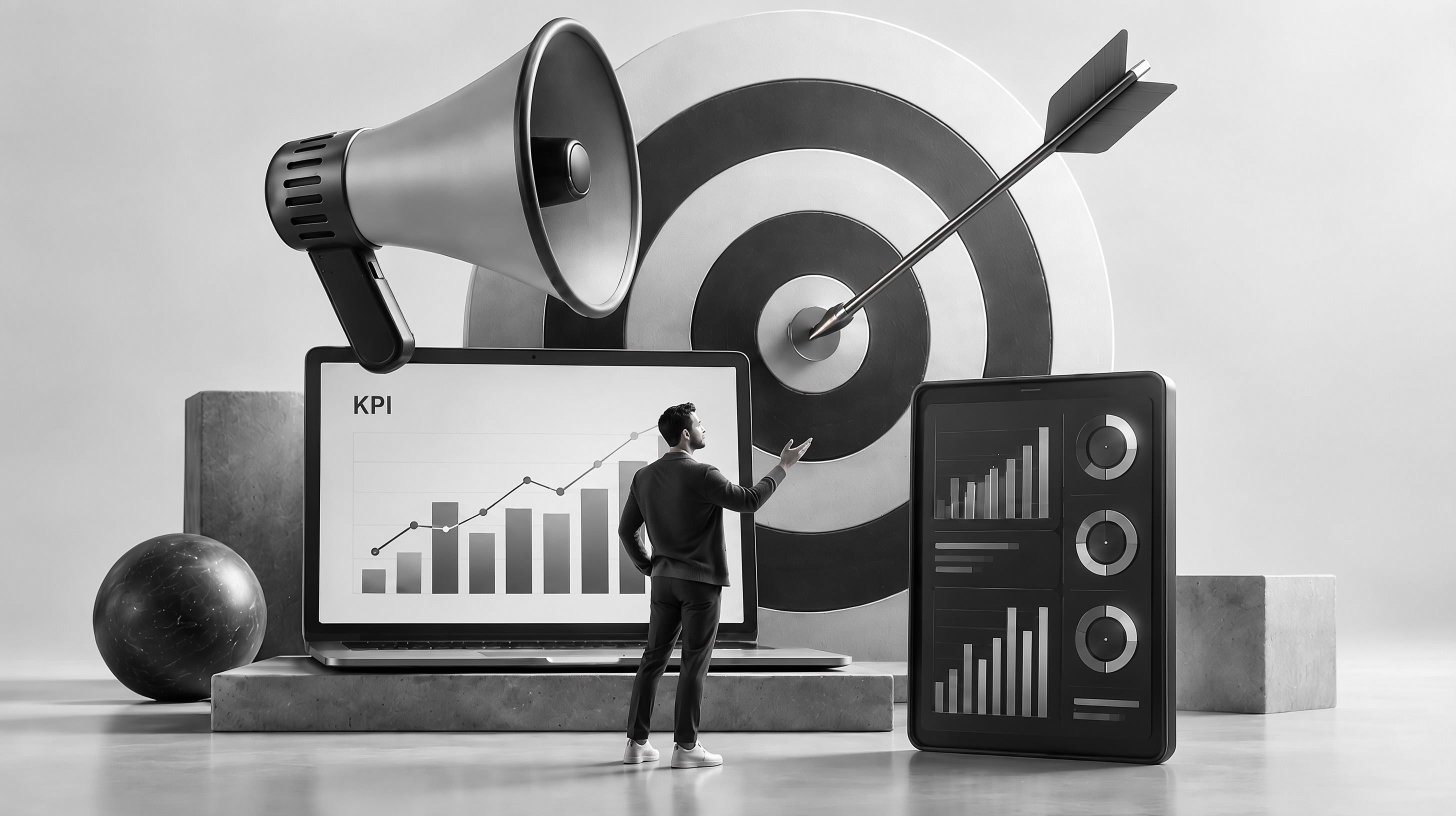
Performance Branding is the discipline of managing brand with the same operational rigor that performance marketing applies to media and conversion. Find out why it wasn't possible at scale previously but is now.
Read MoreAnswers to questions you might have about Brandmaven.

Brandmaven is the system of record for brand performance — connecting real-time monitoring, documented decisions, and measurable outcomes across seven brand dimensions. It gives brand teams a live health score, a radar on their competitors, AI-powered action plans, and the institutional memory to make every decision faster and smarter than the last. No fluff. Just the clarity brand has always deserved.
Brand leaders who are tired of flying blind. CMOs, Global Brand Directors, VPs, and Brand Strategists at growth-stage and enterprise companies — and the agencies that serve them. Also built for the operations and intelligence leaders responsible for making brand decisions at scale: the people who need data, not decks. If brand performance is your accountability, Brandmaven is your operating system.
Far fresher than anything in a survey, spreadsheet, or slide deck. You get updates as things shift — not after everyone’s already moved on. Data is checked and cross-checked by three leading AI platforms: Perplexity, Anthropic, and OpenAI. Enterprise-grade security throughout.
No. Think of Brandmaven as your internal command center — the context layer that makes your agency smarter and your research more actionable. It accelerates what your external teams do, gives you real-time signal between engagements, and means you walk into every agency briefing with a sharper brief. Expert voices and qualitative insight still matter — Brandmaven amplifies them.
No PhD required. The platform is built for brand leaders who need to decide, not decode — clean UI, fast to navigate, and everything you care about front and center. Every engagement starts with a dedicated onboarding process. We handle the complexity. You focus on the intelligence.
Brandmaven is available through three engagement models — Strategy, Agency, and Enterprise — each built around your organization's specific needs. All pricing is custom and quote-based. Contact us to get started.
The most concrete ROI is audience testing: run focus groups using AI personas in minutes instead of the three weeks and $50,000–$100,000 a traditional study costs. Most teams recover the annual cost of Brandmaven in a single research cycle they no longer need to outsource. Beyond that — decisions get faster, alignment improves (one source of truth instead of ten decks), and brand KPIs move because you're acting on real-time signal, not rear-view-mirror reporting.
A brand analysis is Brandmaven's AI-powered assessment of how your brand is performing across seven dimensions: market awareness, perception, positioning strength, consistency, loyalty, association, and market influence. It produces your Brand Impact Score — a single, trackable number that reflects your brand's overall health.
Yes. The Agency tier is built for brand and marketing agencies building intelligence into client engagements — with continuous monitoring across your client portfolio, client-ready reporting, and a reseller program with revenue sharing. Contact us to learn more.
Strategy is a focused engagement — brand intelligence delivered for a specific decision: a market entry, an acquisition, an executive reset. Agency is for brand and marketing firms building Brandmaven into client delivery, with continuous portfolio monitoring and a reseller program with revenue sharing. Enterprise is a dedicated, fully managed deployment for large organizations that need brand intelligence at scale — their own instance, full access, and ongoing support. All three are quote-based. Get in touch and we’ll find the right fit.
We’ll be in touch within one business day. Expect a short conversation to understand your brand, your goals, and which engagement model fits. From there, we put together a proposal and get you started. No drawn-out sales process — just what we need to set you up right.
Required for the website to function. These cannot be disabled.
Used to understand how visitors interact with our website and deliver personalized ads (Google Analytics, Google Ads, Meta Pixel, LinkedIn).